Your Toenails Are Trying to Tell You Something
Most of us don’t give our toenails much thought until something changes. A nail thickens, develops an odd colour, starts to split, or simply doesn’t look the way it used to. While some changes are harmless, others may be worth having assessed.
Paying attention to your toenail health can help you catch problems early and understand when professional care may be helpful.
What Can Cause Changes in Your Toenails?
Toenails can change for many different reasons. One of the most common is repeated trauma. An injury, dropping something on your toe, or repeated pressure can cause a nail to thicken, become distorted, or discolour. A thickened nail isn’t necessarily a fungal nail infection.
Fungal infections are a common cause, however. A fungal nail may become thicker, brittle, discoloured or begin to separate from the nail bed. Because other conditions can cause similar changes, it’s best not to assume that every thick or yellow nail is caused by fungus, but also not to dismiss a thick or yellow nail as not fungal. Your chiropodist can tell the difference.
Changes in your nails can also include:
- White spots or patches
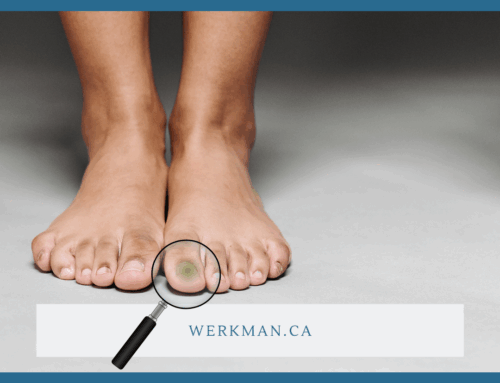
- Yellow, brown or unusual discolouration
- Thickening or distortion
- Splitting or crumbling
- A nail lifting away from the nail bed
- Changes in the shape or texture of the nail
- A new dark streak or band
Toenails can naturally become thicker as we age, and previous injuries can affect how a nail grows for years. However, an unexplained or persistent change deserves attention.
When Should You Have Your Toenails Checked?
If you notice a nail changing colour, shape or texture without an obvious explanation, consider having it assessed rather than trying to diagnose it yourself.
A new dark streak or band under a toenail is particularly important to have checked. Although there are many possible causes for dark nail discolouration, some less common conditions require prompt assessment. If you notice a new or changing dark streak, speak with your healthcare provider or dermatologist.[1]
Pain, redness, swelling, drainage, or a nail that is becoming increasingly difficult to manage are also good reasons to seek professional advice.
Taking Care of Your Toenails
Good toenail health starts with simple habits. Keep your feet clean and dry, trim your nails regularly and avoid cutting deeply down the sides. If your nails are unusually thick, difficult to reach or challenging to cut safely, professional nail care can help.
Most importantly, don’t ignore a change simply because it isn’t painful. Some nail conditions can develop gradually without causing symptoms at first.
Your toenails can provide useful clues about what’s happening with your feet. Paying attention to your toenail health and getting changes assessed when you’re unsure can help keep small problems from becoming bigger ones.
Think Something Has Changed?
If you’re concerned about a toenail that’s thickened, discoloured, painful, or simply doesn’t look right, your chiropodist can assess it and help determine the appropriate next step.